

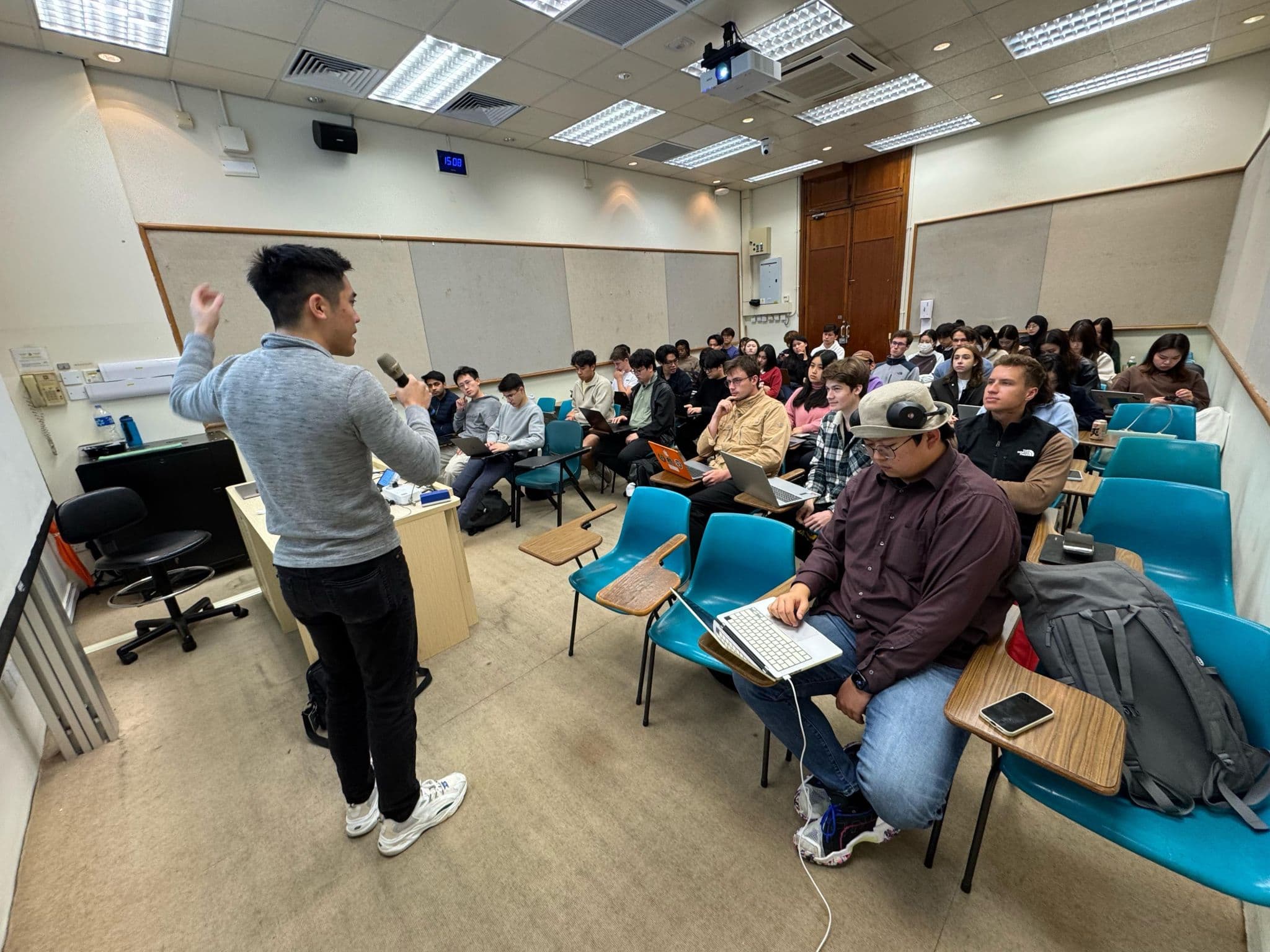
In March 2025, Justin Leung, an Adjunct Associate Professor at HKU Business School, invited Decisions Lab into the Venture and Entrepreneurship Management course he teaches. Louis Cheung, our CEO, gave the guest lecture, on AI simulations and Decisions Lab. During the session, we simulated how the class would rate the lecture, then compared that with the ratings the students gave.
What we simulated
The simulation estimated how the lecture content would resonate with the class, and how relevant it would be to them. At the end, the students filled out a survey and scored the lecture themselves, with an overall rating and a relevance rating, each out of 5. We compared the simulation with those scores.
Simulated lecture ratings, compared with a real survey filled out by the students
How would you rate this lecture overall?
- Simulated response4.88
- Actual response4.78
How relevant did you find this lecture?
- Simulated response4.88
- Actual response4.26
5-point scale
Relevance is the score worth tuning
The simulation called a lecture this class would rate highly, and the survey agreed. An overall rating says the session worked. A relevance rating says whether the content felt useful to those students. For a university shaping a course, or a brand introducing itself to students, that second score is what you would change the material against.
A closer relevance score needs more about the students
The overall rating can be estimated from the course and who is enrolled. Relevance is more specific. It depends on why those students are there, and what they want from the session. Knowing the audience supports the broad score. Knowing their motivations is what makes the relevance score precise.